PONYNJ and the Panama Canal

By Portfolio Editor Roz Hamlett

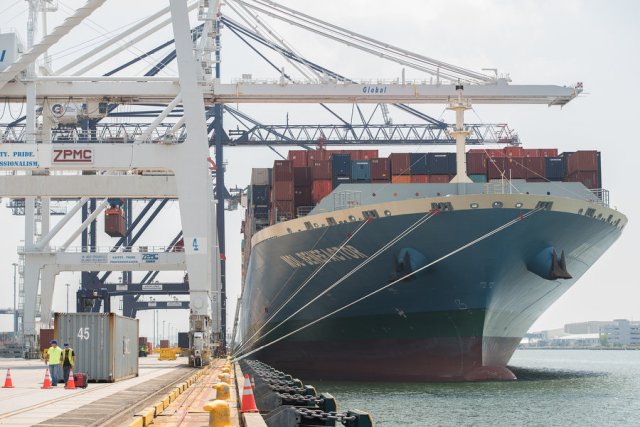
A week ago, the MOL Benefactor, the mega-sized container ship from China, berthed successfully at the Global Container Terminal in Bayonne, N.J. The Benefactor was the largest vessel ever to call upon the largest port on the East Coast – the Port of New York & New Jersey (PONYNJ).  Only a week earlier on July 2, the MOL Benefactor had passed through the recently expanded Panama Canal on its way to PONYNJ.
-7509145a36d9306a

MOL Benefactor

The Panama Canal is a strategically located 48-mile waterway between Costa Rica to the east and Colombia to the west connecting the Atlantic Ocean with the Pacific Ocean. The capacity of the 102-year-old canal has doubled by adding a wider and deeper lane to accommodate larger ships carrying three times the number of containers from Asia to the Eastern and Gulf coasts for less money.

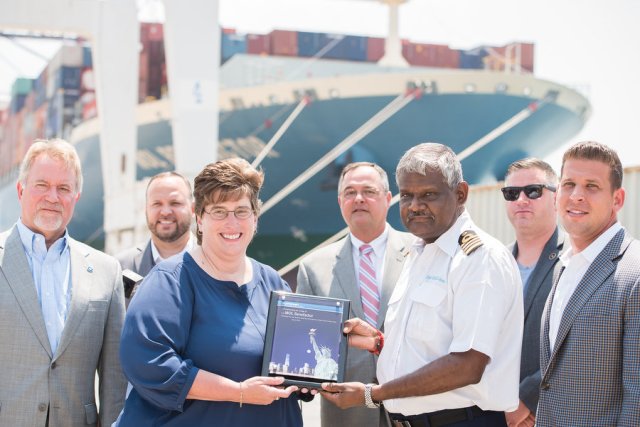
“The Panama Expansion Project coupled with the significant infrastructure investments made by the Port Authority and our container terminal operators allow bigger ships to call the PONYNJ,” said Bethann Rooney, assistant director, Port Performance Initiatives, Port Authority.
-a71600d269a3a7c7

Bethann Rooney, assistant director Port Performance Initiatives and MOL Benefactor Captain Markany Mankkalesmann

After more than a century, the Panama Canal is still considered one of the greatest engineering achievements of all time. This expansion potentially could create yet another sea change in global shipping, rivaling the cost savings of containerization itself.

France began construction of the canal in 1880, but the project wouldn’t be completed until the United States took control in 1904, finishing it 10 years later. The massive undertaking claimed 30,609 souls.
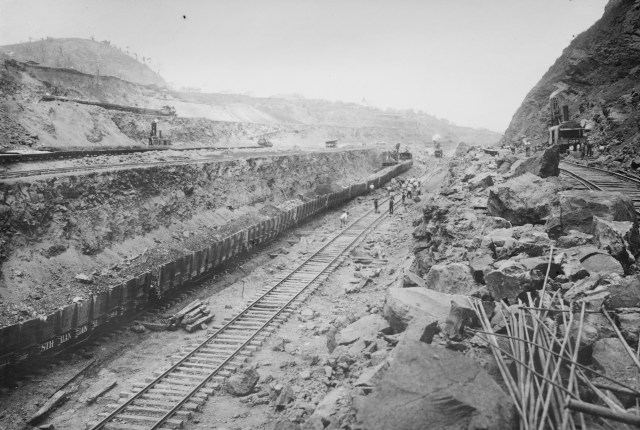
Twin Tracks Loaded with Earth Removed from Panama Canal Bed

UNSPECIFIED – CIRCA 1908: Twin Tracks Loaded with Earth Removed from Panama Canal Bed; Steam Shovels Operate to Load Rocks Blasted away to build the Thoroughfare (Photo by Buyenlarge/Getty Images)

Ferdinand de Lesseps, the French developer in charge of the project, had successfully built the Suez Canal, but the Panama project proved to be his undoing. Under Lesseps’s leadership, the project consumed $260 million without coming to completion, triggering a scandal that led eventually to convictions of fraud and conspiracy. Lesseps died a broken man.

When Theodore Roosevelt assumed the presidency in 1901, most of the world saw the unfinished Panama Canal as a poisonous sinkhole: a disease-ridden jungle of yellow fever, malaria, corruption and the site of 20,000 deaths of workers, who were mostly West Indians.

Yet Roosevelt knew the Panama Canal was the most direct path to America’s greatness. To gain control of the Canal Zone, Roosevelt persuaded Panama to declare its independence from Colombia under the protection of the United States.  On November 3, 1903, rebel soldiers seized the isthmus and the revolution was over by sundown.  A foreign-born shopkeeper and a donkey were the only casualties.

Three Chief Engineers worked on the canal project before its completion: John Wallace, 1904-05; John Stevens, 1905-07 and Colonel George Washington Goethals, 1907-1914.  Goethals, for whom the Goethals Bridge is named, earned the nickname “the Genius of the Panama Canal” for seeing the canal through to its completion.  But Goethals often said Stevens was the real genius because he recognized the project couldn’t be done without first solving the problems of excavation. Stevens ordered all digging to stop while more railroad track was laid until the railroad functioned as a giant conveyor belt, carrying away dynamited rock and other construction debris.

The US overcame the regular flooding of the construction site from the Chagres River during rainy seasons with a temporary dike constructed upstream to capture the floodwaters. A larger, permanent dam was constructed at the mouth of the Chagres, which produced Gatun Lake, with a surface elevation of approximately 85 feet. The captured water flowed into a series of locks that lifted vessels up to the level of the lake, the system still in use today.

The expanded lock system makes PONYNJ a particularly attractive port of call for super-sized ships like Benefactor. In the competition for discretionary cargo, which shippers intend not for local consumption, but to reach destinations hundreds of miles away, PONYNJ is well-positioned because of its investments in waterside and landslide infrastructure.

“With reduced transit times and shipping costs, the PONYNJ becomes more competitive and the better choice for discretionary cargo, particularly those goods destined for the Mid-West,” said Rooney.
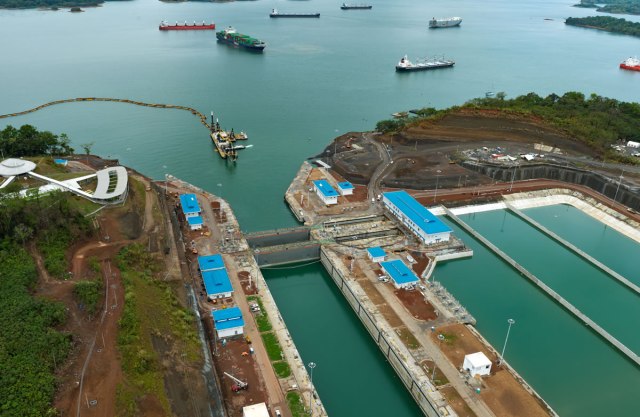
vuelo-2016-mayo15-wl-1-43

Expansion of the Panama Canal

Posted in commerical shipping, containerization, historic photographs, history, Malcom McLean, NY/NJ region, PANYNJ, PONYNJ, Port Authority of New York & New Jersey, Uncategorized | Tagged , , , , , , , , , , , | Comments Off on PONYNJ and the Panama Canal

Diane Papaianni: Heels on the Ground at Newark Liberty International (and boots when necessary)

By Joseph Iorio, Media Relations Staff

Mornings when Diane Papaianni arrives at her office in Building 1 at Newark Liberty International Airport, she never knows precisely what challenges the day will bring. Which is a big reason why her job as General Manager of New Jersey Airports, with its breadth of responsibilities, is both interesting and tough:  there’s never a dull moment.

Diane Papaianni_

Papaianni, a 36-year veteran of the Port Authority, not only confronts some of the busiest sky and ground traffic in the world on a daily basis, but she and her staff are responsible for making facility improvements, ensuring that everything runs smoothly both inside and outside the terminals, and maintaining compliance with federal aviation rules well beyond the tarmac.  All with one main objective in mind:  to create a traveling experience for the flying public that is as predictable and timely as possible.

Though aviation is a field typically dominated by men, Papaianni was attracted to the industry because of the non-traditional work environment and fast-paced nature of the job.

IMG_0702“The work is invigorating, challenging and most importantly, rewarding,” says Papaianni, who began her Port Authority career in 1979. As I walked around the AirTrain Maintenance Control Facility, I was conscious of the fact that I was the only woman in the building (besides the receptionist),” Papaianni said recently.
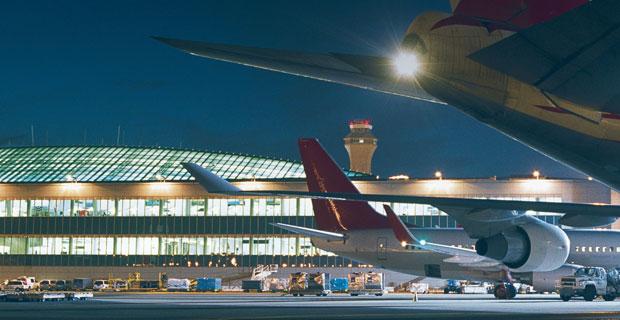
“Even when I attended meetings with contract managers, engineers and other supervisors, I was often the only female in the conference room,” she said.

Papaianni began her career with the Port Authority as a secretary in the Tunnels, Bridges and Terminals Department before making the switch to aviation.  In order to win the respect of her colleagues, she acknowledges working much harder to prove herself worthy of her position.

“I try my best to excel and build strong relationships with all of my coworkers. The main tools I use are confidence in myself and confidence in my own abilities to reach new levels of achievement, both personally and professionally,” she says. “That has worked for me in the past and I’m confident will work for me in the years ahead.”

EWR-V2_1


Posted in air travel, airport history, airport terminals, airports, aviation, New Jersey Air Transportation, Newark Liberty International Airport, Port Authority of New York & New Jersey, Uncategorized | Tagged , , , | Comments Off on Diane Papaianni: Heels on the Ground at Newark Liberty International (and boots when necessary)

PORT AUTHORITY THROWBACK THURSDAY: 1949 HOLLAND TUNNEL FIRE

By Portfolio Editor Roz Hamlett

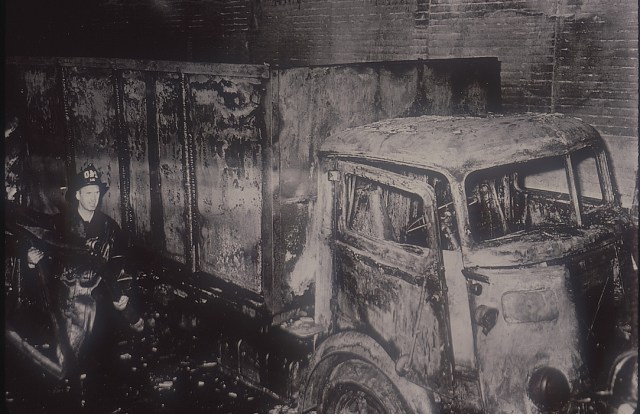
On a late spring morning in 1949, a tractor-trailer entered the Holland Tunnel on the New Jersey side at 8:45 a.m. in heavy traffic, carrying 80 drums of hazardous chemicals. One of the drums fell off the truck, sparking a fire that generated toxic fumes, intensely high heat and caused more than $1 million in total damage.

htfire_5

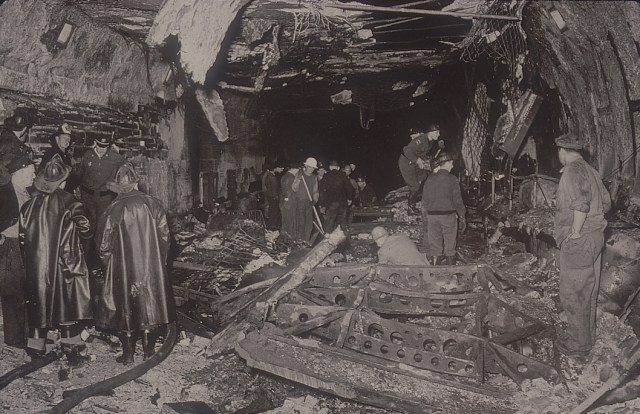
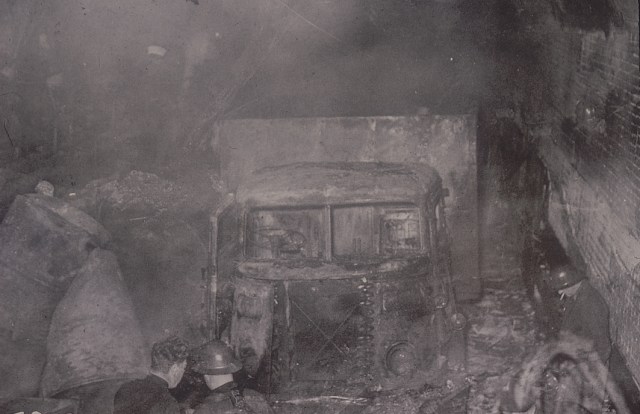
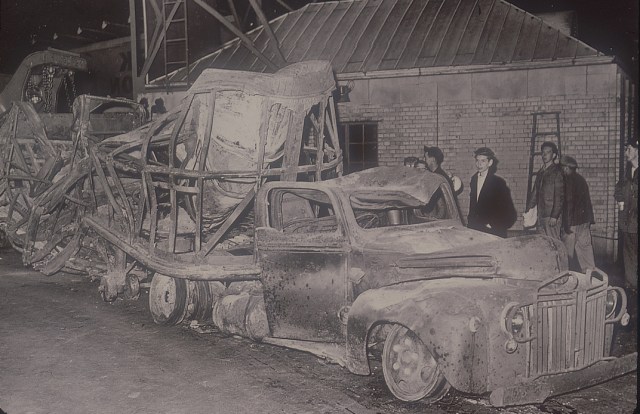
The fire destroyed and damaged trucks, incinerated the ceiling slabs and roadway of the Holland and demolished 600 feet of the tunnel’s white- tiled interior. Remarkably, the final tally in the aftermath of the devastation was 66 injuries, but no fatalities.

“One of the main challenges in fighting the 1949 fire likely was the sheer number of vehicles moving through the tunnel during the morning rush,” said Dan Portuese, who recently was promoted to General Manager of Tunnels, Bridges and Terminals Operations Services.

According to traffic statistics from 1949, the annual number of trucks on the nation’s roads in 1935 was about 732,000 before climbing to more than 6.5 million by 1948.

On the morning of the fire, the truck, with its highly flammable load, was in violation of Port Authority regulations. It had been traveling without the customary “Dangerous” placard as required by the Interstate Commerce Commission.

htfire_2

The fire was very difficult to extinguish due to thick smoke, heavy fumes and close quarters, requiring the assistance of both the New York and Jersey City fire departments. Firemen entered the eastbound tube from the New Jersey entrance and worked their way through two lanes of parked vehicles formed by more than 100 automobiles, buses and trucks.

htfire_3

Progress was slow due to very low visibility. The cleanup took hours as the crews had to remove the fused remains of the trucks. Hundreds of tons of rubble and debris were taken from the tube before it could be reopened to traffic, almost three days later.

htfire_1

“Today things are even more complicated,” said Portuese.  “We’re dealing not only with a greater number and wider variety of vehicles, but also vehicles traveling at faster speeds burning gasoline, diesel and potentially alternative fuels.”

Although the Holland Tunnel fire was expensive and an inconvenient occurrence, it provided a useful but grave warning to the Port Authority about the dangers of flagrant violations in the shipment of hazardous chemicals and the lack of suitable provisions for the enforcement of regulations. The fire might easily have been a major disaster with the loss of many lives. Instead, the incident helped to shape future safety provisions in tunnel operations.

htfire_4

“Fire events are bound to occur at all our facilities, including the Holland and Lincoln tunnels,” said Portuese, “but our skilled facility staff is prepared to deal with these events when they arise. We have traffic rules and regulations that establish the requirements for any vehicle traveling through our tunnels or over our bridges.  We have sophisticated training methods, effective detection systems, advanced technologies and simulated emergency drills that allow us to keep our customers, employees and the public as a whole safe in their travels.”


Posted in historic photographs, history, Holland Tunnel, Jersey City, New Jersey, New York, NYC, Port Authority of New York & New Jersey, Port Authority Police Department, Trans-Hudson, Uncategorized | Tagged , , , , , | Comments Off on PORT AUTHORITY THROWBACK THURSDAY: 1949 HOLLAND TUNNEL FIRE