PA Storm Prep Means Knowing Which Way the Wind Blows

By Amanda Kwan, Media Relations Staff

The New York-New Jersey region is no stranger to severe weather. Residents know summers mean pop-up thunderstorms, tropical storms, and hurricanes.

But in early August, the National Oceanic and Atmospheric Administration threw the region a curve: an updated forecast of an “extremely active” Atlantic hurricane season, with 19 to 25 expected storms harboring winds of 39 mph or more. As many as 11 could develop into full-blown hurricanes.

Credit: NOAA

With memories of extensive damage and lingering power outages from Tropical Storm Isaias still fresh, planning for the next big weather event is a part of everyday operations at the Port Authority’s six river crossings. At the first hint of bad weather in the forecast, discussions begin on storm preparations: Are the drains cleared? Are all construction and maintenance equipment secured? Is there a staffing need for additional emergency personnel?

Each PA crossing has unique concerns based on geographic location, physical structure, and any ongoing projects at each facility.

The George Washington Bridge, for example, has two wide levels of traffic to consider, while the Goethals and Bayonne bridges and the Outerbridge Crossing have a single level of narrower proportions. The PA uses roadway weather information systems that provide continuous data on atmospheric, pavement, and/or water level conditions – invaluable in real-time operations management during storms.

The George Washington Bridge, in calmer times

The bridges share similar protocols for weather-related restrictions when wind could be a major factor, guided by forecasts on sustained wind speeds and expected gusts. These two metrics result in different approaches to preparation and response, likened to the difference between being stuck in a wind tunnel for a prolonged period compared to a momentary but strong breeze.

During inclement weather and high winds, the Port Authority could restrict or outright ban tandem trucks and tractor-trailers, motorcycles, and bicycles on its bridges. Speed limits are often sharply reduced. Extremely poor visibility and hurricane-force winds might prompt closures that can take 45 to 90 minutes to be fully implemented.

 “If we get close to these forecasts, we won’t hesitate to put a restriction in place even if we’re an hour or more from that weather reaching our facilities,” said Ken Sagrestano, the general manager of the George Washington Bridge. “We start having those discussions sometimes days in advance with our regional partners because of our potential impact on the broader traffic network connected to us.”

Since the Port Authority’s vehicular crossings are links in a much larger transportation network, PA facility restrictions have significant impact on regional traffic for millions of motorists. As a member of TRANSCOM, a coalition of 16 transportation and public safety agencies across the region, the agency provides updates and coordinates operational responses with its transportation partners. 

The PA uses social media, electronic alerts and digital signage on roadways to provide motorists with updated information, which is useful when decisions must be made quickly with sudden weather shifts. Port Authority police provide enforcement support, and additional bridge personnel may be called in to help monitor road conditions.

“Our officers will not hesitate to pull over a vehicle that shouldn’t be out at our facilities when weather restrictions have been implemented,” said Edward T. Cetnar, superintendent of the Port Authority Police Department. “If we see someone where they shouldn’t be, it’s getting pulled over and turned back around as quickly and safely as possible so that the driver doesn’t endanger themselves or others.”

Posted in Uncategorized | Comments Off on PA Storm Prep Means Knowing Which Way the Wind Blows

PAPD Officers Take the Plunge for Vets

By Lenis Rodrigues, Media Relations Staff

The U.S Navy Seals are regarded by many as the best-trained of all the military’s special forces. On Saturday, a team of Seals – joined by two members of the PAPD Emergency Services Unit — put their training to the test to honor victims of 9/11 and those who fought in the wars that came after.

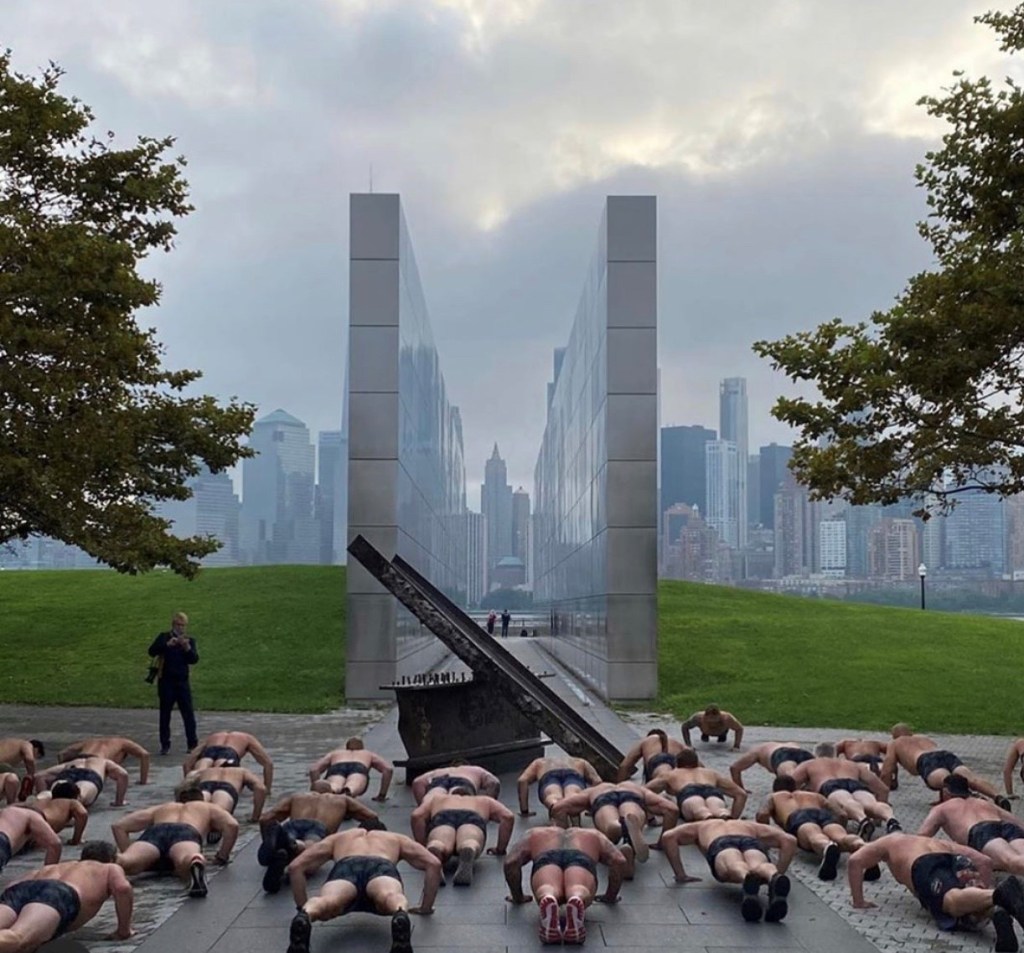
PAPD Officers Andrew Vignapiano and Brian Fink volunteered for the three-mile Hudson River swim, with stops at the Statue of Liberty and Ellis Island, performing 100 push-ups and 22 pull-ups to recognize the 22 veterans who commit suicide every day. Police officers and firefighters from other departments, as well as a member of the “Fox and Friends” television crew, also took part.

Officers Vignapiano (left) and Fink after the swim

Funds raised during the event, the second year it has been held, go to benefit the GI Go Fund. Launched in 2006, the fund is dedicated to finding places for homeless vets to live and providing them with job training and entrepreneurial support. The fund also assists veterans affected by the COVID-19 pandemic.

“The men and women who work at the Port Authority of New York and New Jersey are among the most patriotic I have ever worked with,” said GI Go Fund CEO Jack Fanous. “They stepped up to provide volunteers for the event and support at every step of the way. Without them, there simply would not be a SEAL Swim.”

Vignapiano, who has been competing in triathlons for the past few years, said he saw in GI Go an opportunity to make a difference after being exposed to homelessness during his more than a decade as a PAPD officer and learning that many are veterans.

“They provide veterans with job training, employment opportunities, essential needs, and outreach programs,” he said of GI Go. “I am proud to support such a cause, as well as our nation’s veterans.”

After a tiring but exhilarating swim, the SEALS, PAPD officers and other participants retired to the 9/11 memorial pools, where they paid tribute to those who made the ultimate sacrifice nearly two decades ago.

Posted in Uncategorized | Comments Off on PAPD Officers Take the Plunge for Vets

Baby Oysters Cruise from Port Authority’s Red Hook Terminal

By Amanda Kwan, Media Relations Staff

The Port Authority and the Billion Oyster Project (BOP) celebrated their years-long partnership in mid-July with a ceremony involving 15 million oysters – but not a single one ended up on a seafood platter.

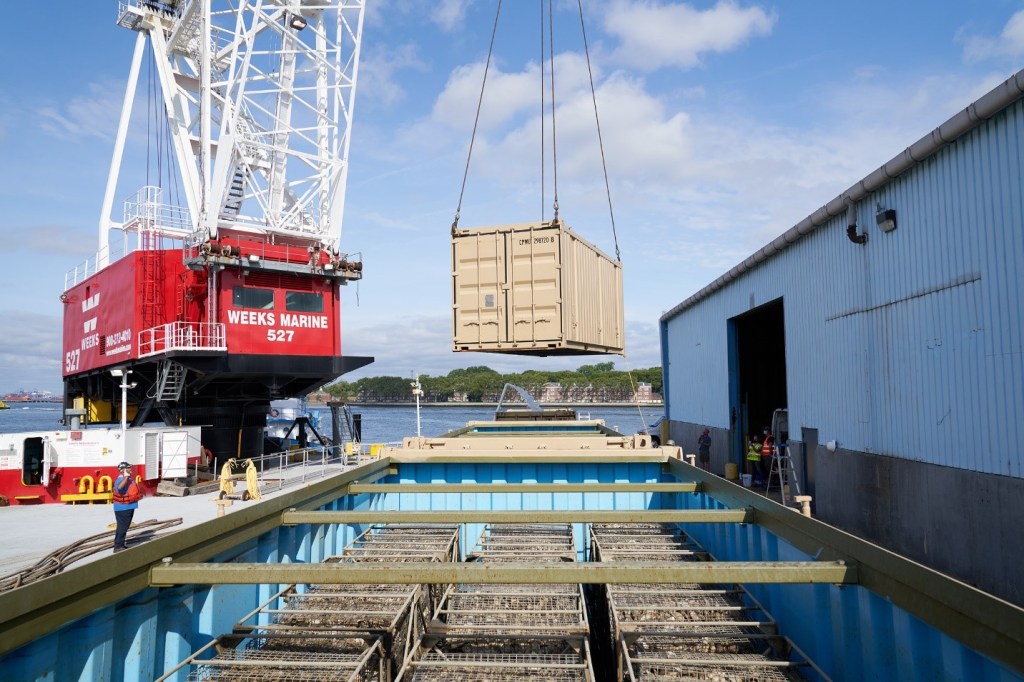
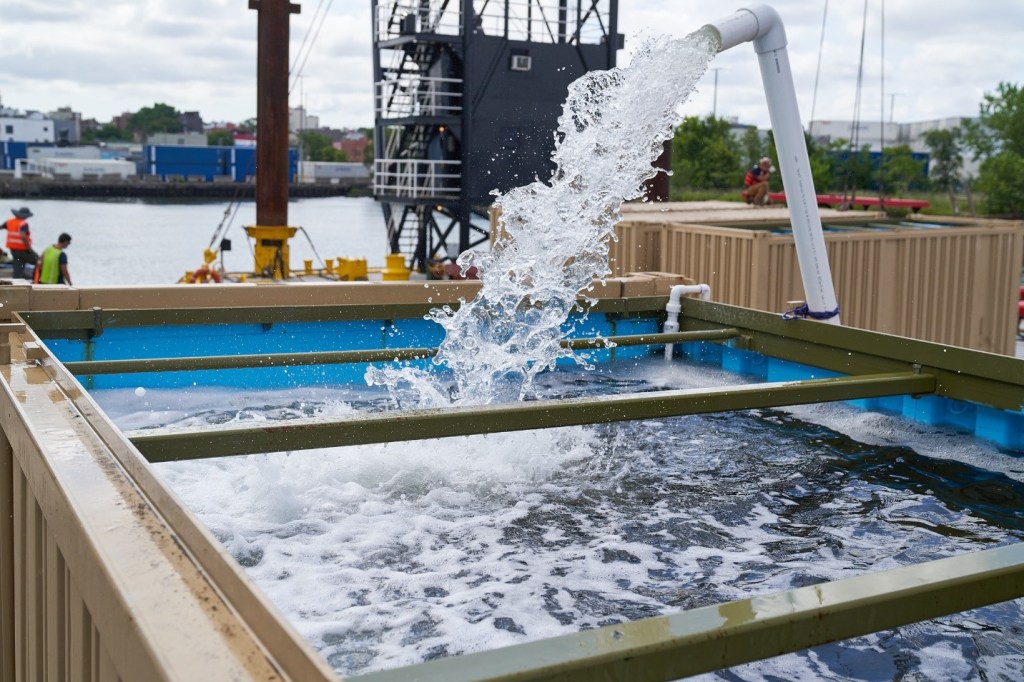
The BOP began moving the oysters from a new waterfront seeding facility at the Brooklyn Port Authority Marine Terminal via barge last month to their new underwater home near Soundview Park, at the mouth of the Bronx River. The move was enabled by the Red Hook Container Terminal (RHCT), a Port Authority tenant that donated space and four shipping containers retrofitted to serve as a school bus of sorts for the oyster babies en route to the Bronx River.

The collaboration with BOP provides waterfront access and the logistics equipment needed to hoist the shipping containers – each filled with 9,000 gallons of seawater and oyster racks – onto Port Authority-owned barges to carry baby oysters to the farther reaches of New York Harbor. Oysters are just as delicate as their taste; the babies cannot survive long outside their optimal living conditions. Ensuring they remain blissfully uninterrupted in their watery homes is crucial to their survival.

Altogether, these first four shipping containers transported 15 million baby oysters north from Brooklyn to the mouth of the Bronx River, where eventually five new acres of oyster reefs will help filter millions of gallons of seawater to benefit the city’s marine ecology. Millions more oysters will take a ride in the shipping containers later this month from Brooklyn to the new reefs in the Bronx River.

Photos by Douglas Lyle Thompson, courtesy of the Billion Oyster Project

“This is a big moment for our crew and community at large,” said BOP Executive Director Pete Malinowski.

The Port Authority’s history with the BOP predates its evolution from a project at the Urban Assembly New York Harbor School. In 2009, while working in the Port Department, Robin Bramwell-Stewart met Harbor School representatives interested in developing a maritime training center on Governors Island. It led to the PA working with the school to place students into Port Department internships, tours of Port facilities, Port-related school projects and workforce development programs for students.  

“Part of the reason for being involved with the BOP and the Harbor School is to be involved in programs that can produce the next generation of maritime workers for our Port,” said Bramwell-Stewart,  now the PA’s interim general manager for its three Staten Island bridges who became a BOP board member in late 2018. “A clean and sustainable harbor, which provides a source of regional employment, is critical for the future of the Port and harbor life in New York.”

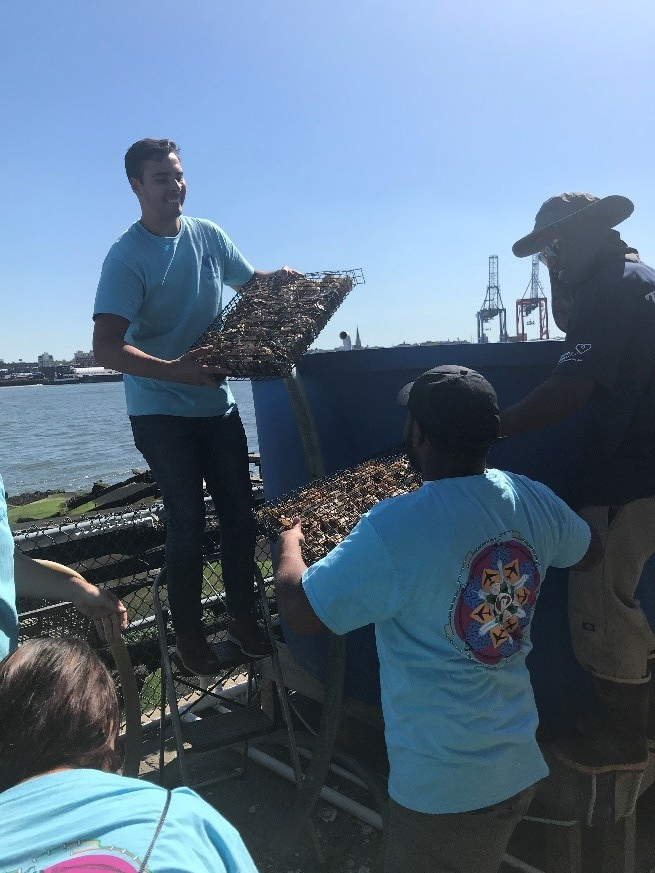
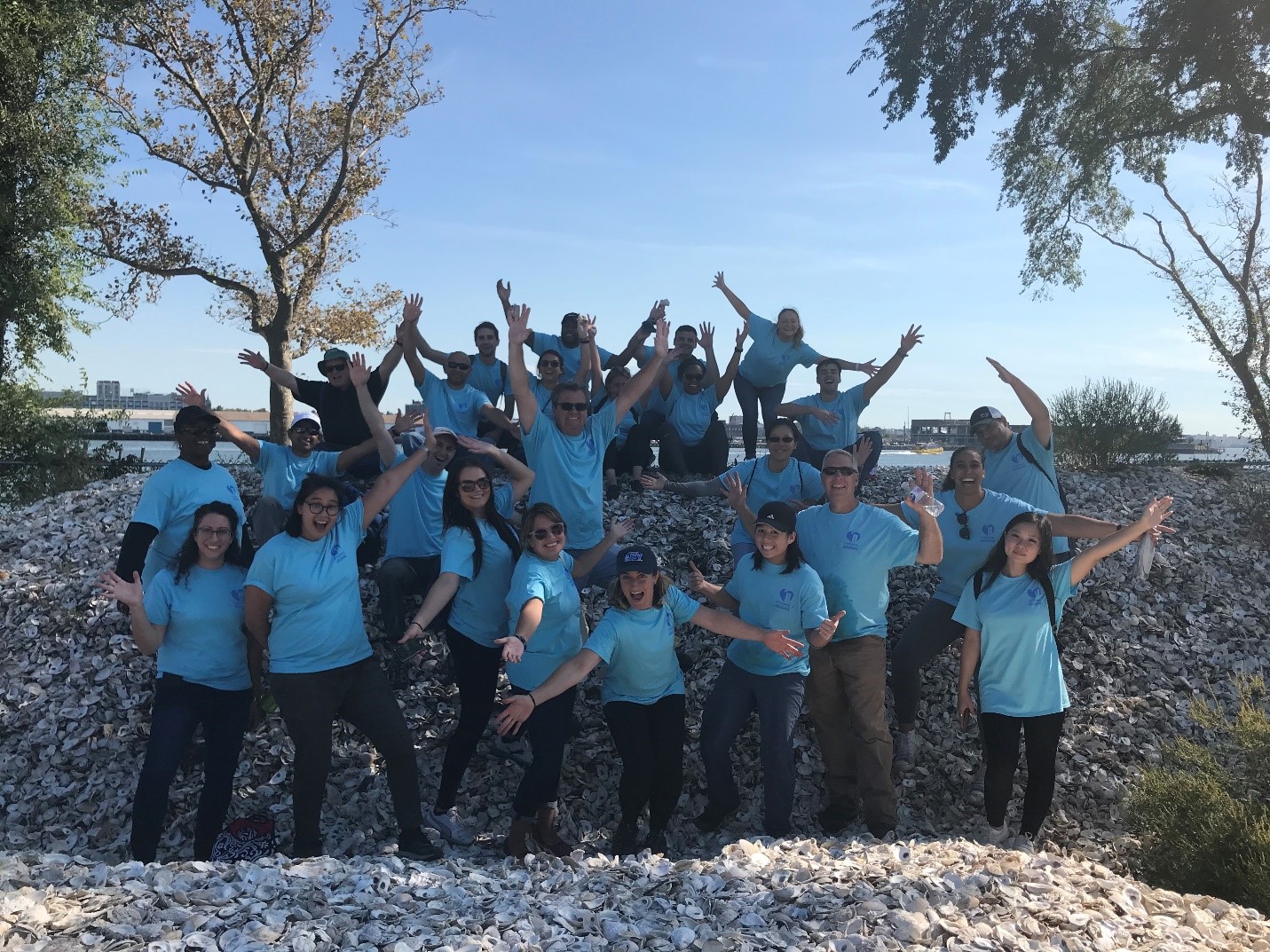
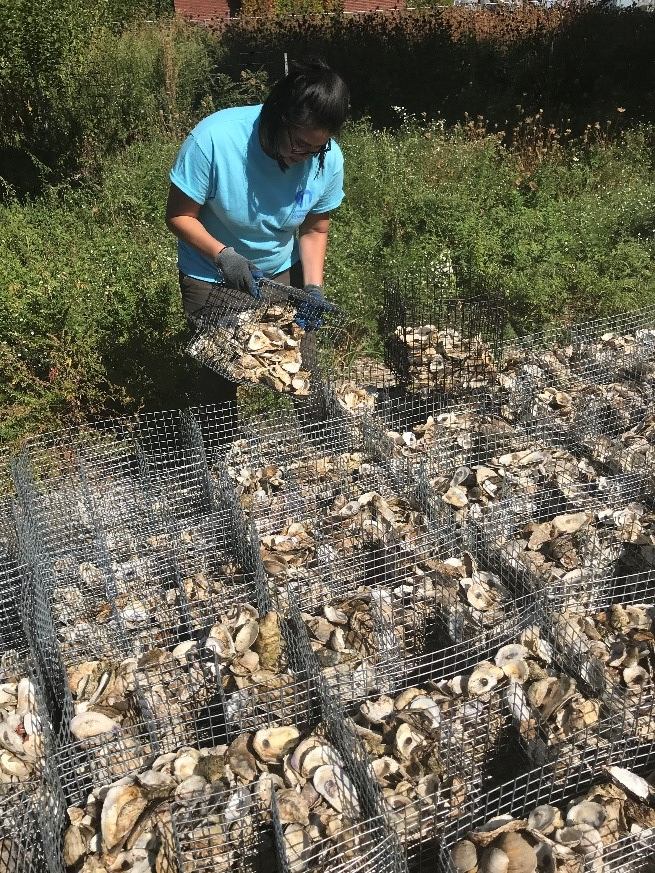
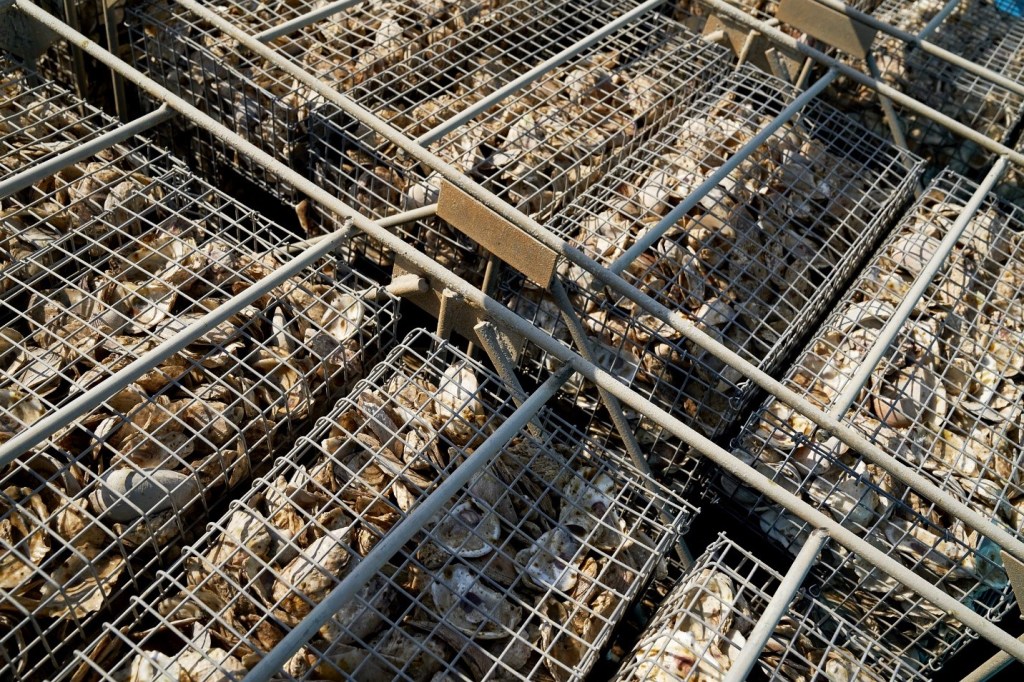
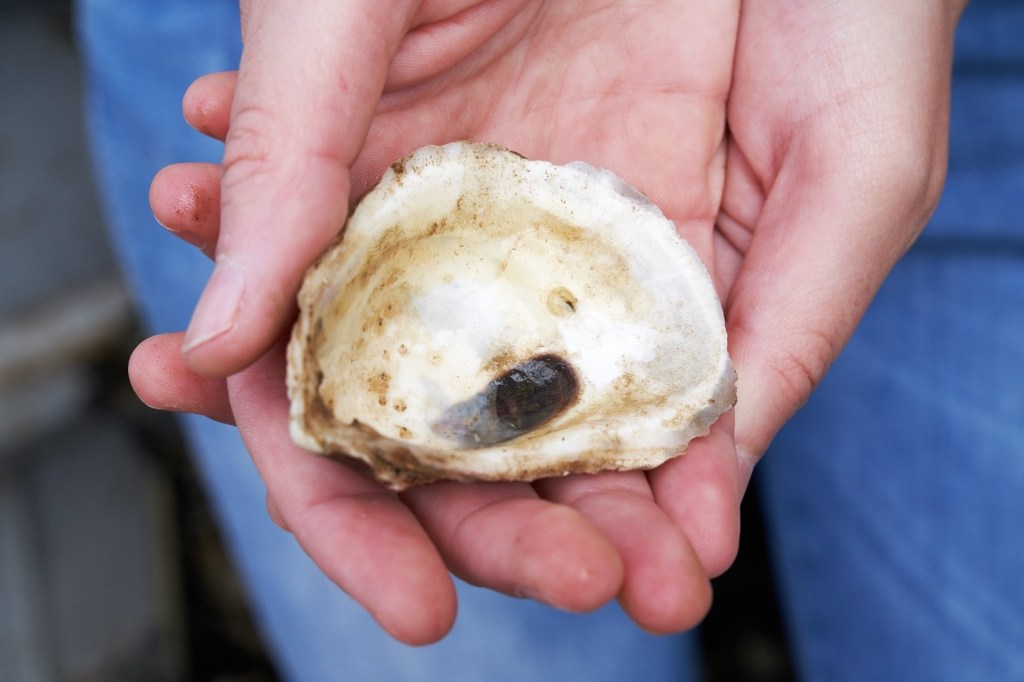
As one of BOP’s 19 board members, Bramwell-Stewart makes policy and strategic decisions to help reach a goal of seeding one billion oysters in New York Harbor by 2035 and to increase public education of the city’s marine ecology and oyster reef restoration. Not only do the reefs clean the water, they also help protect waterfront communities and critical Port Authority assets like tunnels and airports from storm damage by reducing flooding and preventing shoreline erosion. So far, more than 30 million oysters have been planted and 13 reef sites have been installed with help from students and volunteers, including some from the Port Authority. Most recently, 15 PA staffers volunteered with BOP through the Port Authority’s Remembrance Through Renewal program, which provides employees with volunteering opportunities to honor those who died in the two World Trade Center terrorist attacks.

Photos of last year’s PA volunteer group working with oyster shells

“The Port Authority has hands in the city’s air, land and sea, and we’re using them to help whenever possible,” said Bramwell-Stewart.

“We support the efforts of the Billion Oyster Project, and together with their work and the Port of New York and Jersey’s sustainability initiatives, it’s clear that the health of New York Harbor is improving for sea life,” said Beth Rooney, Deputy Director of the Port Department. “We definitely can use more oysters right now.”

Photos by Douglas Lyle Thompson, courtesy of the Billion Oyster Project

Posted in Uncategorized | Comments Off on Baby Oysters Cruise from Port Authority’s Red Hook Terminal