The Old Goethals: Taking a Drive Down Memory Lane

By Neal Buccino, Media Relations Staff, and Port Authority Project Consultant Nicole Hunter

Tonight, traffic will come to a stop on the 89-year-old Goethals Bridge connecting Staten Island and Elizabeth. The 7,100-foot bridge is giving way to a new Goethals directly adjacent to it, and the old structure awaits demolition.

While it’s the end of one era and the start of another for the region’s network of bridges, the old Goethals leaves a rich legacy. Here’s a list of the nine things every Goethals aficionado ought to know about the historic span.

It’s pronounced GO-thuls

If, like most people in the region, you pronounce it “Gah-thuls,” you’ve got it wrong. The first syllable is “go” – appropriate for a bridge. This comes from the best possible sources – the many living descendants of Major Gen. George Washington Goethals, who played an important role in the bridge’s creation and whose great-great grandchildren Abigail Goethals, Lucia Goethals Poster and Ben Goethals Poster all live in New York City. 
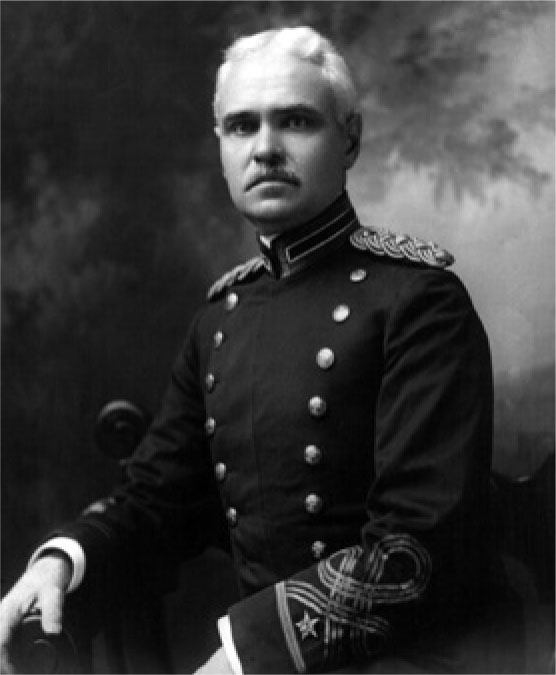
C - George Washington Goethals

George Washington Goethals, the man behind the bridge.

Goethals never lived to see his namesake bridge completed

The man who built the Panama Canal and was the first consulting engineer for the Port Authority died five months before completion of what was first called the Elizabeth-Howland Hook Bridge. The Port Authority renamed the bridge in Goethals’ honor and the first cars rolled over it on what would have been his 70th birthday: June 29, 1928. 

The Goethals and its twin, the Outerbridge Crossing, were the first facilities built by the Port Authority

The two bridges, similar in design, were the first facilities constructed by the Port Authority. The Outerbridge Crossing opened later the same day, and the Port Authority now had two impressive modern structures joining New York and New Jersey.

The original car toll was 50 cents — 25 cents on horseback

When the Goethals Bridge opened nearly nine decades ago, a passenger car had to pony up 50 cents, though a ride on horseback only cost a quarter. Tractor trailers were a dollar per crossing. You could walk across the bridge for a nickel. Only military, police and fire department vehicles were exempt from tolls. Times have changed. Among other things, horses are no longer allowed on any Port Authority bridge. 
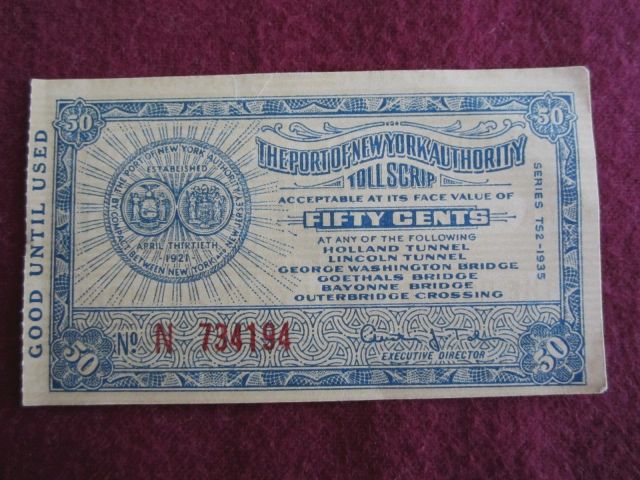
L - Toll Scropt 1935

“Good Until Used” – your ticket across the old Goethals Bridge.

The designer considered cantilevered bridges “uncompromisingly ugly”

The original Goethals is a steel cantilevered truss bridge. At the time, it offered the best way to cross the Arthur Kill without impeding the navigation of ships. John Alexander Low Waddell, premier bridge engineer of the early 20th century, did not share Port Authority’s belief that the bridge was destined for aesthetic greatness. He called structures of this kind “uncompromisingly ugly.” Despite his reservations, Waddell did the best he could with the designs for the Goethals Bridge and Outerbridge Crossing. The new Goethals Bridge features a cable-stayed design, the new and more attractive standard for modern bridges.

The Goethals wasn’t the first bridge between Staten Island and Elizabeth

The Goethals is not the first bridge to span the Arthur Kill. Its predecessor was a temporary, floating pontoon structure built by the British during the Revolutionary War. After losing to the Continental Army and militia at the Battle of Springfield in June 1780, the British retreated back to Staten Island and destroyed their creation. The world would have to wait 148 years for a new span.

A - Goethals Bridge view - cars (2)

Cars crossing the Goethals in the early 1930s.


Renowned Mohawk steelworkers from Canada were among its builders

Workers from the Caughnawaga (Kahnawake), a band of Mohawks, helped build the original Goethals Bridge as well as the George Washington Bridge, Bayonne Bridge and other bridges and skyscrapers throughout the region. They were legendary for performing skilled construction work hundreds of feet in the air – fearless, immune to the stomach-churning vibrations of the rivet guns and uniquely qualified for difficult steelwork at vertiginous heights.

The Goethals helped create the Port Authority Police Department

The development of the Goethals Bridge and Outerbridge Crossing required the creation of what today is America’s largest transportation-related police force. The first 40 recruits signed up on June 1, 1928 – just weeks before the two bridges opened – and were subject to a crash course in police methods, traffic control, first aid, firefighting and toll collection.  With police authority in both New York and New Jersey, they were originally known as “Bridgemen” and “Bridgemasters” until 1939, when those titles were changed to Police Officer and Sergeant. 

Tony Soprano drives past it in every rerun of The Sopranos

It’s fitting that one of the finest examples of bridge-building is featured on one of the finest television series of the modern era. The original Goethals Bridge has a cameo in the opening credits of The Sopranos. See it at the 33-second mark here.
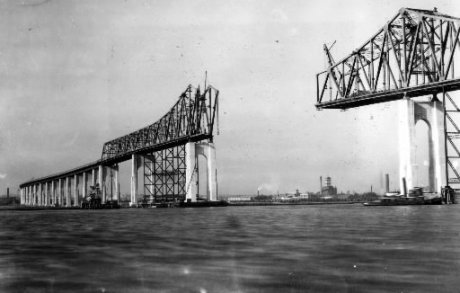
E- construction

The bridge under construction in the 1920s.


Posted in Uncategorized | Comments Off on The Old Goethals: Taking a Drive Down Memory Lane

Unbuilding the Bayonne Bridge

By Neal Buccino, Media Relations Staff

The Bayonne Bridge “Raise the Roadway” project, designed to lift the span to accommodate a new generation of bigger commercial ships, offered an unprecedented engineering challengebuilding a new bridge over the old roadway, while the existing one was still open and carrying traffic.

The effort continues, but in reverse. Engineers are now focused on ‘unbuilding’ the old bridge.

With the Port Authority’s close supervision and the dedication of scores of demolition workers and engineers, the removal of the Bayonne Bridge’s original span is happening at record speed. The old bridge took 38 months to build, and carried traffic for 85 years . The dismantling of the old roadway will take four months. In fact, the disassembly should be done six months ahead of schedule.

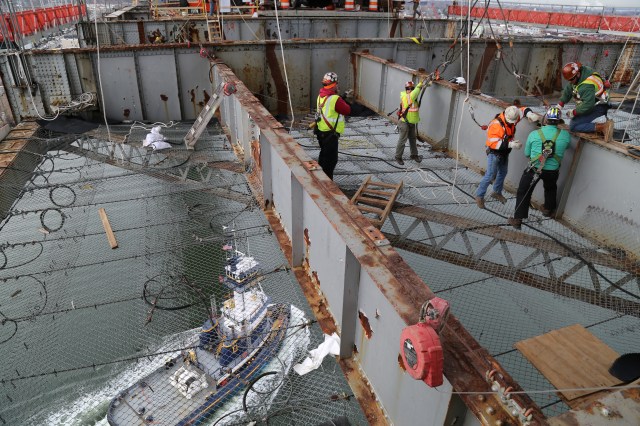
The colossal task of removing 9,800 tons of aged steel and concrete – and doing it safely above an active waterway without polluting the environment – is performed section by section and from the center of the span, out to its historic arch.

1 - BB Demo

A container vessel passes beneath the Bayonne Bridge while workers continue removing steel from its lower roadway.  Photo by Mike Dombrowski, Port Authority.

The entire process takes place at dizzying speed in this time lapse video prepared by the Port Authority’s Raphael Azucar and Conrad Barclay: https://youtu.be/lkM1MisRpwA. 

The span is divided into sections called “panel points,” each of which represents a concrete square — 40 feet on a side — that is supported by steel girders and floor beams, and suspended by two wrist-thick steel ropes that support both the original and the newly built roadway from the bridge’s iconic steel arch.

To remove the structure, cranes equipped with giant saws slice each panel point into four 20-foot concrete squares.  The squares are then lifted away, revealing the steel framework that held them in place for nearly a century. Workers then remove the metal box of girders and floor beams, and proceed to the next panel to start the process again.

The material removed was placed mostly on trucks and driven out over the remaining roadway. As the bridge span now is almost entirely gone, however, it needs to be lowered onto a barge on the Kill van Kull. The remaining steel will be recycled. One day, some of it may well be reincarnated as the bones of a new bridge.

7 - BB Demo

Sparks fly as workers separate the 85-year-old steel floor beams and girders that once made up the lower span of the Bayonne Bridge. Photo by Mike Dombrowski, Port Authority.

The “Raise the Roadway” project’s expected economic benefits – not to mention the challenge of building a new roadway 215 feet above the Kill van Kull, 64 feet above the original span– make it one of the most unique infrastructure projects in the United States. Navigational clearance is expected this summer.

“I’m pleased that we are reaching navigational clearance six months ahead of schedule,” said Steven Plate, the Port Authority’s Chief of Major Capital Projects. “I am also extremely proud of what we have accomplished through the drive and dedication of the men and women who are performing this critical work.”

2 - BB Demo

A head-on view of Bayonne from the partially removed roadway on the bridge’s Staten Island side.  Photo by Luis Avendano, Port Authority.

Posted in Uncategorized | Comments Off on Unbuilding the Bayonne Bridge

Throwback Thursday: The Skies Over Queens and the Port Authority’s Decision

By Roz Hamlett, Portfolio editor

Many people living in the vicinity of a Port Authority (PA) airport know that the agency engages actively with local community groups and roundtables on noise abatement issues. What’s less known is that these efforts began more than 50 years ago.

Under the leadership of former PA Executive Director Austin Tobin, the world’s first aircraft-noise monitoring system was developed and installed.

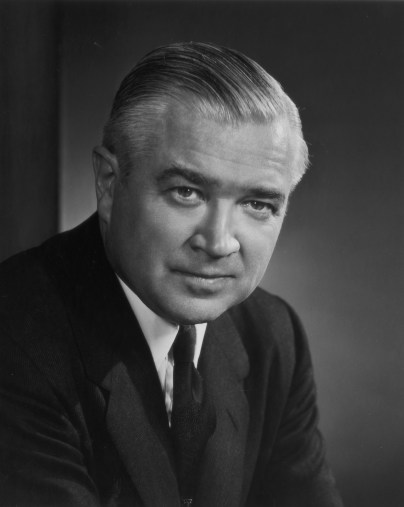
TOBIN_Cumulus

Austin Tobin was the Executive Director of the Port Authority from 1942-1972.  Educated at the College of the Holy Cross and Fordham Law School, Tobin was born in Brooklyn on May 25, 1903.

In 1958, Tobin was facing a serious problem. He had to find a way for a person owning a house near an airport to be able to sit comfortably on his or her porch and enjoy life.  Tobin was convinced that if aircraft noise was too loud, a good quality of life was impossible, and the airport’s relationship with its neighbors would suffer.

Meanwhile, Pan American Airways, at the time the largest international air carrier in the country, wanted PA permission to fly its new Boeing 707 from Idlewild, what is today Kennedy International Airport. It was a military jet transport plane refitted internally as a passenger aircraft.  The airplane had no mufflers.

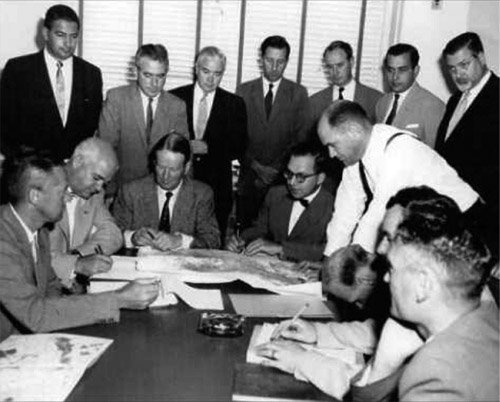
beranek3

A group meeting with Austin Tobin and members of the Bolt, Beranek and Newman team in New York discussing noise measurements in August 1958.  Two months later, the Boeing 707 ushered in the commercial jet age on October 26, 1958.  Tobin is third from the left on the back row.  Beranek is seated and wearing glasses.  Tobin’s determination to install noise monitors impacted airport operations across the world.

Aggravating matters was a lawsuit filed by Newark residents because of the noise created by the large propeller airplanes at what is now Newark Liberty International Airport.

Years earlier, the PA had told the airlines that jet planes must make no more noise than large propeller planes during takeoffs and landings. Boeing assured the Port Authority their 707 could meet this requirement, but Tobin was receiving conflicting reports.

During a test flight of the prototype 707, an event attended by Tobin and several sound experts from the acoustical consulting firm of Bolt, Beranek and Newman (BBN), Boeing’s claims about the 707 were contradicted.

Massachusetts Institute of Technology professor Leo Beranek later would later write:  “We were stunned – the noise was terrible, unbelievable. The Boeing people appeared devastated.”

Angst over the Boeing 707 was growing, and Tobin informed Beranek that if something wasn’t done to control the noise, Idlewild residents were threatening to send “mothers with baby carriages onto the runways.”

So, on a late summer day in August 1958, Tobin planted himself on the front porch of a home near the end of the runway in Howard Beach to hear for himself how loud the aircraft were.  The Port Authority authorized BBN to develop a program to determine what level of jet noise would be acceptable in neighborhoods around Idlewild.

BBN gauged noise levels in Queens under many different conditions.  They measured and recorded take-off noise, distances of test locations and with cameras pointed skyward, they measured the height of each flight.  Sound meters and cameras were placed in communities.

By the end of August, Tobin had his answer: 112 perceived noise decibels (PNdB) would be the limit for takeoffs at Idlewild. By late October, a Pan Am Boeing 707-120 at full capacity flew from New York City (NYC) to London, and later a British Overseas Airways Comet 4 flew from London to NYC. Both flights had PA approval.  Neither provoked a community reaction to the noise.   Tobin’s decision to install noise monitors impacted airport operations all over the world by establishing rules and baseline noise metrics at a critical point as the jet age got underway. Both manufacturers and European airlines were put on notice that they must work to suppress jet aircraft noise if they planned trans-Atlantic flights to the New York region.

“Credit must [go] to Austin Tobin for financing the study, accepting the results and setting and enforcing limits of “noisiness” in the face of intense industry and government objection,” Beranek wrote in 2004.

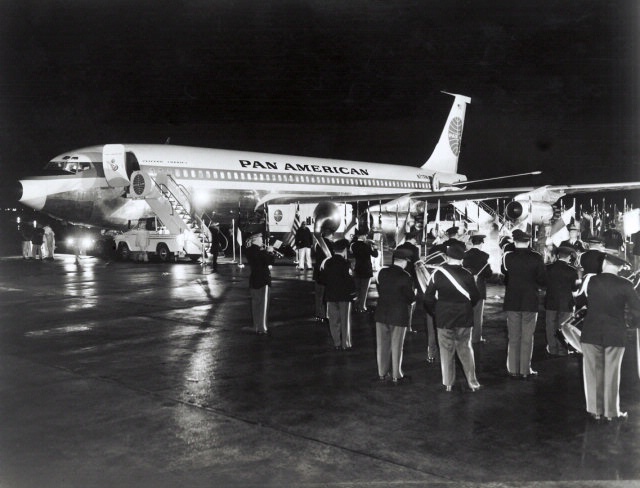
bc843694d9eae01a3e227b1df50bc8bd

The Boeing 707 opened the commercial jet age for the U.S. on October 26, 1958.  Pictured above is the 707 on the tarmac on the day of its inaugural flight. The 707 allowed the U.S. to gain the lead in commercial jet transportation.  It remained in continuous production from the mid 1950s until 1977 with more than 1,000 aircraft produced.

Posted in air travel, airport history, aviation, aviation geeks, Idlewild, John F. Kennedy International Airport, Kennedy Airport, Kennedy International, Newark Liberty International Airport, NYC, PANYNJ, Port Authority of New York & New Jersey, Uncategorized | Tagged , | Comments Off on Throwback Thursday: The Skies Over Queens and the Port Authority’s Decision