WTC GREENMARKET SPROUTS BACK UP AFTER 16 YEARS

By Ashley Germinario, Port Authority Media Relations Staff
GreenMarket sign2

A relationship between rural farmers and city natives is usually a rare sight. Yet, beginning in 1984, the interactions of these two groups became the norm in Lower Manhattan, where their friendships began over the exchange of blossoming flowers, fresh fruits and ready-to-eat veggies.

The Greenmarket, operated by the environmental organization GrowNYC, visited twice a week at a spot along Church Street near the old 4 World Trade Center. Here, dozens of farmers put their green thumbs to good use, supplying the surrounding city foot traffic with healthy, locally grown products.

IMG_0590

Greenmarket patrons celebrate the return of the outdoor market to the World Trade Center.

All that came to a halt with the devastation of 9/11. Many farmers and vendors serving the community when the twin towers were struck were forced to abandon their loyal customers and friends for years.  Nearly 16 years later, they’ve returned.

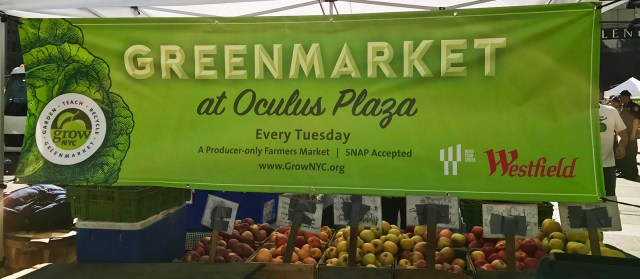
Starting June 20, the Greenmarket featuring 11 farmers – many of whom sold their produce in the area before 9/11 — will reopen on Tuesdays from 7 a.m. – 7 p.m. on the Oculus Plaza at Fulton and Church streets outside the WTC Transportation Hub, with fresh local seafood, breads and pastries, vegetables, orchard fruits and juices and dairy products available for sale. It is scheduled to run through Nov. 21.

“The Greenmarket was a key part of the fabric that made up the World Trade Center community and the neighborhood that surrounded it before 9/11,” said Port Authority Executive Director Pat Foye.  “We’re pleased the market is now coming home – nearly 16 years after it left – strengthening the menu of fresh, healthy food offered at the site and providing an attractive amenity for those who live and work here.”

Farmers markets have become fixtures in New York City, benefitting local farmers and city residents. As the World Trade Center neighborhood continues to rebuild, its bonds with local businesses such as Greenmarket are growing.  The prevalent theme with GrowNYC’s Greenmarket, then and now, is a strong community tie.

“This reunion of Greenmarket farmers with the community of Lower Manhattan is immensely meaningful,” said GrowNYC President and CEO Marcel Van Ooyen. “In addition to gaining access to healthy local products, Greenmarket customers at the market will once again find comfort in the familiar faces of their favorite farmers.”
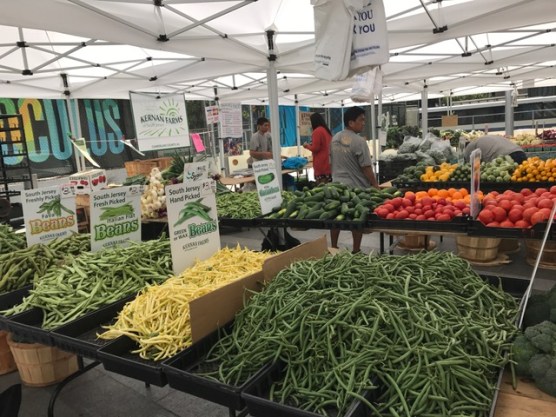
IMG_2523

For the first time in 16 years, fresh produce and vegetables are available for sale every Tuesday at Fulton and Church streets.

Posted in Uncategorized, WTC, WTC PATH station | Tagged | Comments Off on WTC GREENMARKET SPROUTS BACK UP AFTER 16 YEARS

Throwback Thursday: Stewart, New York’s Other International Airport

By Roz Hamlett and Ashley Germinario, Media Relations Staff

Until now, the only thing missing from Stewart International Airport was the international. With the commencement of regularly scheduled low-cost flights to Europe on Norwegian Airlines, the one-time U.S. Air Force base joins the Port Authority’s network of truly intercontinental airports.

2016_12_16-nycairports-698x800

Stewart International Airport is strategically located north of the ‘Big Three’ Port Authority airports:  Newark Liberty International (EWR), LaGuardia Airport (LGA) and John F. Kennedy International Airport (JFK).  Westchester County Airport (HPN) is county owned and not operated by the Port Authority.

But without the forward thinking of one influential aviation enthusiast, the former sprawl of upstate New York farmland might never have become an airport, let alone an emerging player in international commercial flight.

In 1930, Archie Stewart had the remarkable foresight to convince his uncle, Samuel Lachlan Stewart, to donate more than 200 acres of the family’s farmland to the city of Newburgh for an airport. Commercial aviation was on the rise, and Stewart reasoned that the city would need an airport for its economy to grow.

The first big boost came four years later when the U.S. Military Academy at West Point built the first airfield for cadet aviation training at the behest of its superintendent, Douglas MacArthur (the same MacArthur who would later distinguish himself as a five-star general during World War II).

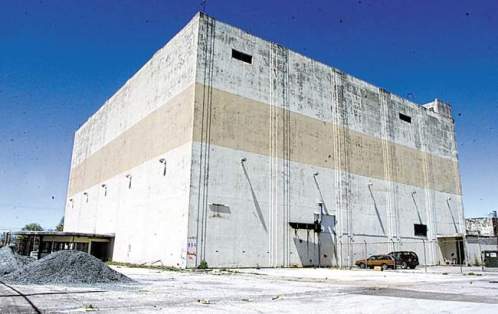
During the Cold War years of the 1950s, a concrete spy bunker – one of 22 constructed nationwide – allowed the Air Force to monitor the activity of enemy planes. The air base was deactivated in 1970, with the state of New York acquiring the land and turning the airport in the direction of commercial aviation.

AR-811230315

From this nondescript concrete building, the Air Force monitored the activities of enemy airplanes.

It was then-New York Gov. Nelson Rockefeller who, after seeing the long runways, envisioned the airport’s potential as a hub for intercontinental flights. After its closure as an air force base, Rockefeller put together an ambitious plan to expand and develop the airport.

In 1985, W.R. Grace built the first corporate hangar, becoming the first private company to invest in the airport, and several businesses began operations there during the decade. In 1989, American Airlines announced the beginning of scheduled domestic flight service at Stewart, followed by American Eagle and United Express.

That same year, the airport opened a 50,000-square-foot air cargo building, and the U.S. Postal Service began operating its new mail distribution facility. In 2000, Stewart signed a 99-year lease with National Express Corporation, becoming the first privatized commercial airport. At the time, the only international flights from Stewart were seasonal charter flights to Cancun.

The PA purchased the lease in 2007 from National Express and made the airport part of the region’s airport system. Through more than $180 million in investments, the Port Authority transformed the airport into an efficient transportation hub with convenient parking, shorter lines, and personalized customer service – an experience not always possible in the region’s larger airports.

After being underused for years with just a handful of carriers offering a limited number of flights, the airport is emerging as ‘New York’s Other Airport.’

Posted in airport history, Hudson Valley, John F. Kennedy International Airport, LaGuardia Airport, Newark Liberty International Airport, Port Authority of New York & New Jersey, Stewart International Airport, Uncategorized | Tagged , , , , | Comments Off on Throwback Thursday: Stewart, New York’s Other International Airport

The New Goethals: Opening a Road to the Future

By Neal Buccino, Media Relations Staff

One era ends, another begins.

At 10 p.m. Friday, the old Goethals Bridge closed for good after 89 years. Just 18 hours later its replacement opened to Staten Island-bound traffic and, by 12:20 p.m. Sunday, the new Goethals bridge also was carrying traffic to Elizabeth.

The diversion of drivers from the old to new span over the course of a momentous weekend is captured in this time-lapse video, produced by the Port Authority’s Mike Dombrowski:

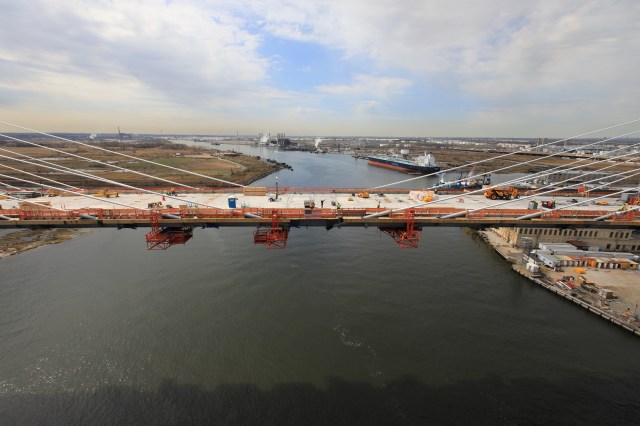
A second time lapse-video charts construction of the bridge’s eastbound span with its 272-foot, V-shaped towers rising rapidly from the earth, the installation of its 450-foot-long stay cables and the moment the two sides of the roadway finally meet in the middle.

While the new span took slightly more than three years to build, its creation unfolds in just over a minute in this video, also produced by Dombrowski:


E - New Old Goethals

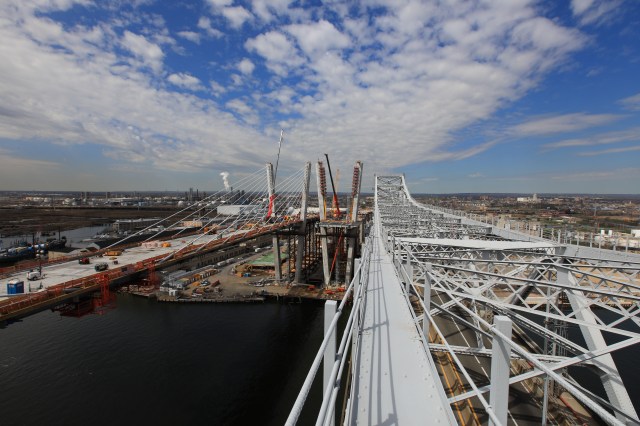
The original, cantilevered truss bridge is on the right. The twin spans of its replacement, a cable stayed bridge, stand right next door. Today, only one of those structures carries traffic. The second will open next year, after which the new Goethals Bridge will be nearly three times as wide as its predecessor.

C - Center of SPan

The new Goethals represents a new era in bridge building. Funded and built through an innovative public-private partnership that is the region’s first of its kind — and embodying a 21st-century union of elegance and strength — it will leave its distinctive mark for generations to come.

Posted in Goethals Bridge, Goethals Replacement Bridge, PANYNJ, Port Authority of New York & New Jersey, Uncategorized | Tagged , , , | Comments Off on The New Goethals: Opening a Road to the Future